Introducing Atlas, Facebook's New Ad Network (That Already Knows You)

Introducing Atlas, Facebook's New Ad Network (That Already Knows You)

Remember when Internet advertising consisted of pop-ups and banner ads promising prizes to the 1,000,000th visitor?  Or guaranteeing that if you managed to smash the fly, you would receive a free iPod? I think we can all agree it’s a good thing those days are over.

Today, Internet advertising takes many forms, but chief among them is collection of ads associated with a remarkable little thing called a “remarketing pixel.” By embedding the remarketing pixel—a creative little piece of code that acts as an advertising multi-tool—into their website, webmasters can gain access to an array of new tricks.

Read More

Injecting Rich Media with Content - Guest Post by Michael Goldberg, Martini Media

Injecting Rich Media with Content - Guest Post by Michael Goldberg, Martini Media

Why Brands Should Align Messaging with Content

With consumer engagement at a premium, it's been a battle for marketers to win a user’s undivided attention. Perhaps that’s because advertisers have been overly focused on selling vs. engaging. 

Consumers are not looking for the next great sales pitch, they are looking to be informed and entertained. By aligning brand messaging with relevant and compelling content, you are giving them the type of material that encourages them to read and share.

Read More

The Future of Social Media - Guest post by Meghan Keaney Anderson, HubSpot

At this very moment there are more than 181 thousand people claiming to be social media ninjas, gurus, or mavens on Twitter. Each of them will happily talk to you, in 140 character increments, about the strength of social as a channel. 

In many ways they’re right.  U.S. Internet users spend three times longer on social media and blogs than email today. And social media use has seen a 356% increase since 2006. 

But in other ways, we’re just at the beginning of figuring out this social media thing and learning ways to use it to best realize its potential as a scalable and personal communications channel.

Let’s take a look at the current state of what we’ve been able to achieve with social media marketing and trends that indicate where it may be headed in the future. 

Social Media Posting

Current State: Heavy on Media, Light on Social 

Today’s social media marketing has a tendency to be high on media but low on social. All too often corporate feeds read more like a series of direct-mail subject lines than conversation prompts.

Read this. Click here. Like me! 

Read More

Dear Media: Turn Off the Lights on Your Way Out - Guest Post by Robyn Peterson, Mashable

Source: Mashable.com

Ad dollars have been on the decline for years, and while they continue to shrink even now, media companies continue to believe in the strategy of belt-tightening, rather than rethinking the rules of the game.

But first, why are ad dollars shrinking? The main reason isn't what most folks think (programmatic advertising), but rather it's because more big fish have moved into the pond.

Five tech companies now control 68% of all online ad revenue. And it ain't gettin' better. By 2015, Facebook alone is expected to account for 20% of all online ads sold.

Read More

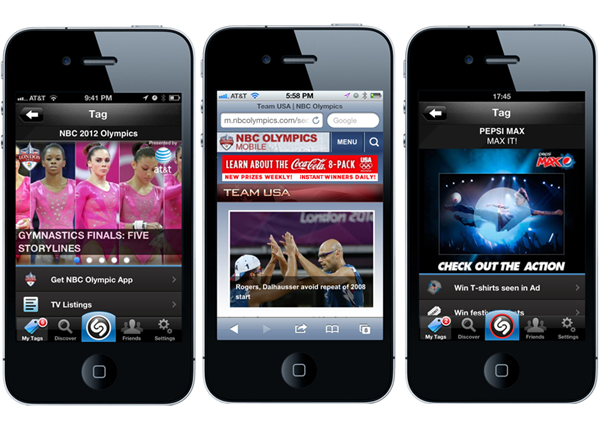
The New Viewing Experience: The Second-Screen Revolution - Guest Post by David Jones, Shazam

The birth of TV over 50 years ago forever transformed the way people view the world.

Now, another major change is occurring: the transition from passive to interactive television viewing.

The technologies behind the internet, mobile devices and television are converging to form a new and more engaging viewing experience, and consumer electronics manufacturers, technology providers, advertisers and broadcasters alike are fighting for their piece of the pie in the new digital landscape.

Key to this vision of the future of TV is handing control of the viewing experience back to the consumer and allowing them to engage with content on their own terms. What was once considered a passive activity has evolved to become an interactive experience, with mobile devices – the “second screen” – driving this trend and acting as a companion to our television viewing. 

Read More

The Irony of Digital Publishing in Newspapers -- guest post by David Rozzi, The New York Post

Flite's Guest Blogger series features the industry's top thought-leaders to share insights on display advertising, agile marketing, and innovation.

David Rozzi is the Director of Digital Projects at The New York Post.

---

With the advent of the iPad and the myriad new tablet devices that have come onto the market, publishers have flocked to the tablet platform. 

They see tablets as a golden opportunity, an exploding new space to increase the footprint of their brands to both current and new readers. 

From a content perspective, tablets allow publishers to provide relevance in new ways, through slideshows and video galleries, interactive graphs and photos, pop ups and hotspots, etc. From an advertising perspective, tablets provide advertisers with more attractive animated ads, the ability to collect metrics, and interact with customers via surveys, links, and shopper units.

Publishers are taking full advantage of marketing apps to attract new readers and the features of digital advertising.

Read More

Geo-Targeting Is Obsolete In The World Of Social Publishing - Guest Post By John Chan, BuzzFeed

Flite's Guest Blogger series features the industry's top thought-leaders to share insights on display advertising, agile marketing, and innovation.

John Chan the Vice President of Social Discovery at BuzzFeed.

---

It’s exciting that brands have started to recognize the value of content as marketing.  The infrastructure for communicating with customers at scale is now well established -- it’s clear that relevant and meaningful content is the currency for customer engagement.   

Content can now easily find its audience.  Great content that gets shared can result in new customers and brand ambassadors, all powered by social word of mouth.  Brands have even come to understand that it won’t matter how good their content is if people do not discover it, that it’s not enough to simply post it as an update on their social profiles, and have embraced the use of paid media to drive that discovery.

However, most marketers still fail to realize that just because many of their content activation channels are “typical” ad products, it doesn’t mean that the conventional targeting tactics for those channels are a recipe for success.  

Read More

Where Is Good Design In Digital Advertising? — Guest Post By Prateek Alsi


Flite's Guest Blogger series features the industry's top thought-leaders to share insights on display advertising, agile marketing, and innovation.

Prateek Alsi is the Director of Distribution Partnerships at Square. The thoughts represented here are his own.

--- 

Success in Silicon Valley has traditionally hinged heavily on hiring the best engineering talent. But we’re witnessing a seismic shift. Hiring the brightest programmers – while essential for building world-class products – is just table stakes for the next set of disruptive companies. The youngest generation of rising tech companies has realized one thing: it’s all about design.

Take Uber, the black-car hailing service that has made a complex logistics operation effortless. On the surface it is nothing more than a mobile app that sends a black town car to pick you up when you press a button on your phone. Or consider Peek, a new online travel site that helps you discover things to do when visiting a new locale. And let’s not forget the now ubiquitous discovery apps that we all use to pin or post what we fancy. Even last month’s Fast Company magazine was dedicated to the now-famous quote of IBM’s legendary CEO that “good design is good business.”

Read More