The Evolving Content/Native Landscape
/Back in April, we took a look at Terence Kawaja's LUMAscape for the digital ad space (at the time, it was useful to draw a comparison with the IAB's new Digital Advertising Arena chart).
Reflecting the growth and complexity of the emerging native and content advertising space, Luma Partners has released a new LUMAscape. Like the others, it's crowded with a well over a hundred logos, a reflection of the rapid proliferation of roles in the rapidly evolving native and content advertising world.
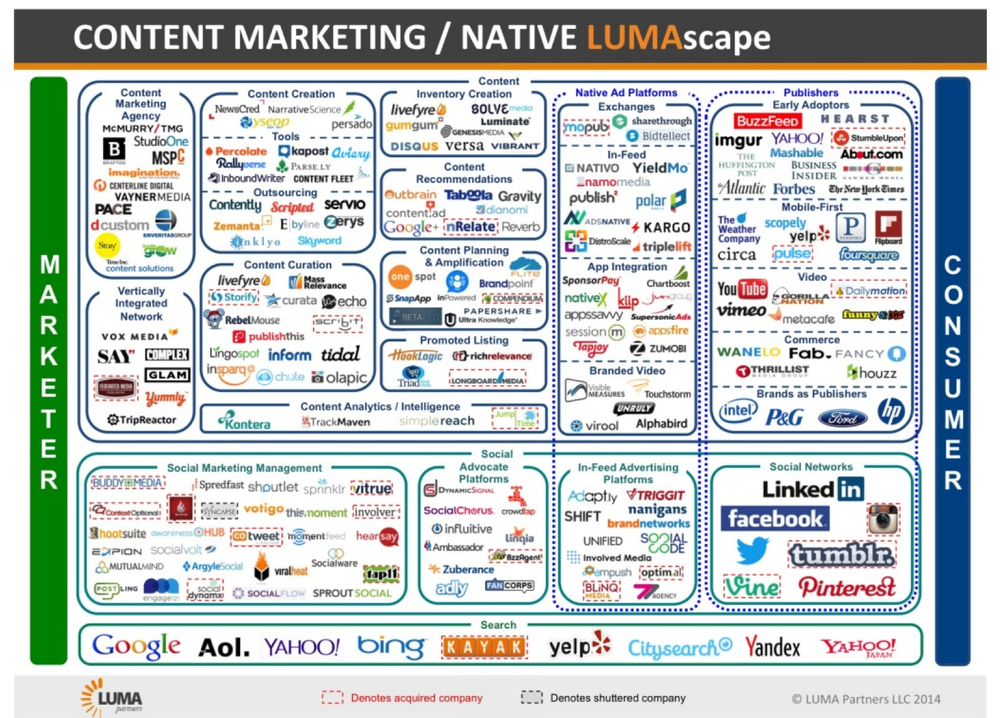
Let's have a closer look at the categories, particularly in the realm of content:
- Content Marketing Agency: Consultants that work with advertisers to identify their content goals and needs and, in some cases, manage the deliverables process.
- Vertically Integrated Network: Publisher aggregators that can work with advertisers to develop content that fits the voice and topical themes of the sites they manage.
- Content Creation: Manage teams of writers, either on staff or freelancers, to develop content per advertiser or consultant specs.
- Content Curation: Technology layer that helps surface content that meets the requirements of campaigns.
- Content Analytics/Intelligence: Tracks how users interact with content, giving advertisers insights into how to optimize their content development.
- Inventory Creation: Helps publishers extract supply from ancillary sources of content, such as images, captchas and comments.
- Content Recommendations: Drive referral traffic from one piece of content to others, on the site or elsewhere in their managed networks.
- Content Planning & Amplification: Platforms that extend the reach of marketing content. Flite is included in this category, as its cloud-based platform allows advertisers to stream in content into their display ads (paid media publishing), vastly expanding the audience for advertiser content.
- Promoted Listing: Technology that uses user behavior to promote product listings that are most likely to convert. Often involves crowdsourced ratings, reviews and other UGC content.
- Native Ad Platforms: These players are focused on native placement of content-rich advertising:
- Exchanges: Automated marketplaces for advertisers and publishers to bid against natively-placed inventory.
- In-Feed: These focus on sites with stream-based user consumption of content, which simplifies the native ad formats available to advertisers.
- App Integration: Focus on identifying and making available native ad placements within mobile applications.
- Branded Video: Platforms that trade in sponsored video, primarily placed in video-rich contexts.
- Publishers: The content sites/networks that have pioneered the use of natively-placed advertisements:
- Early Adopters: Those sites and site networks that took a pioneering role in developing the native advertising space.
- Mobile-First: Publishers that have initially or primarily focused on leveraging their mobile feeds as native advertising springboards.
- Video: Video publishers that have monetized using native video placements.
- Commerce: Hybrid e-commerce sites that also leverage natively-placed ads as a method to monetize shopping traffic.
- Brands as Publishers: Brands that have embraced content marketing in their owned media as an important component of their marketing mix.
Social media, with its feed-based content consumption paradigm, has always been a natural fit for content-rich native advertising. The bottom half of Kawaja's chart makes clear this is a complex landscape as well.